1.Sold a retainer, not a shoot.
A retainer with an agreed monthly output, produced from batched shoot days.
That structure matters more than the numbers. It means stores get pulled off the floor a handful of times a year instead of every month. It means content is banked ahead and released on a plan rather than scrambled for on the Friday. And it means the strategy has a runway long enough to actually test something.
A shoot gets you assets. A retainer gets you a plan that survives contact with a busy month.
2.Built content pillars instead of ideas.
Three formats that repeat and scale across the network.
Ask Your Barber takes the advice that already gets given a hundred times a day in the chair and turns it into education that soft-sells the product range and the app.
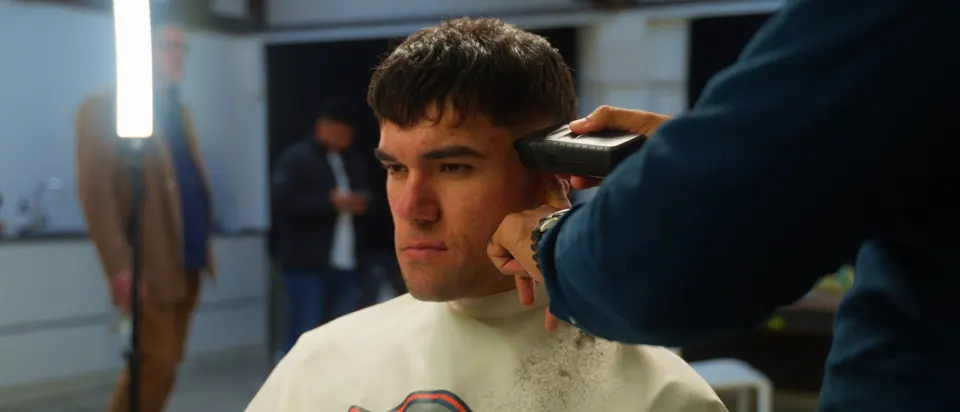
In the Chair treats the barber and client conversation as a format in its own right. It is the most underused asset in the business and it exists in every store, every day.
Store and owner spotlights turn the franchise model from a logistics complication into a content engine. Twenty three locally owned stores means twenty three people with a reason to share.
3.Anchored the first month to something already happening.
The first shoot was not invented. BarberShopCo already had something of its own in the diary, and we built the shoot day around it: barbers explaining their cuts and product technique, and the thinking behind the choices they make.
One studio day produced the first month and banked material for the second. The lesson generalises. The best content is usually already happening inside the business.
4.Set a baseline before starting.
A baseline was set before the first video went out, so there is a before to compare against. Most content work never establishes this and then argues about whether it worked.
5.Made 23 stores look like one brand.
Consistent grade, consistent format, consistent caption voice. “Everything speaks” is one of their own values. The content now does too.