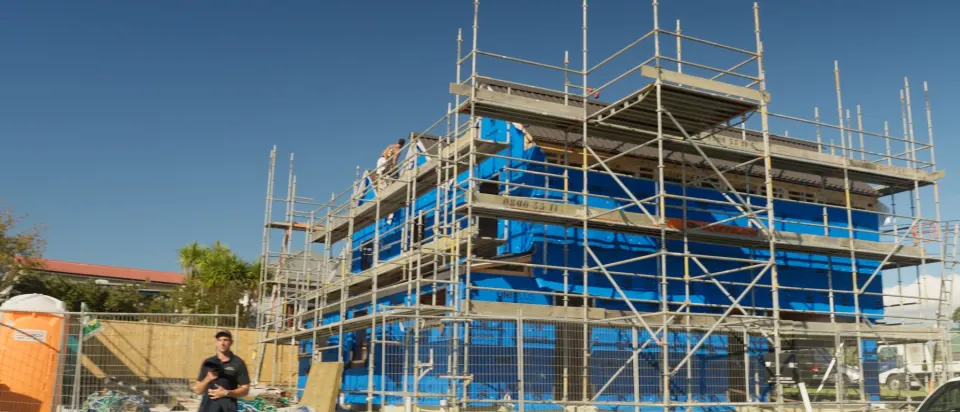
1.Built a format, not a shoot list.
Three videos at every site, every time. A short orientation piece that says where we are and what stage the build is at. A progress piece that shows the actual craft going on. A direct response cut built for paid. Same three at every location.
That sounds like a small decision. It is the whole thing. It means a three hour shoot day has a known output, the feed builds one continuous narrative across six sites instead of six disconnected ones, and there is never a blank page on a Monday.
2.Changed who the content was talking to.
The early rounds pointed at retail buyers. Reviewing what was actually landing, we moved the strategy toward professional builders and developers, and toward the founder's own expertise as the asset.
That produced the current scripts: the consent and RFI delays that eat a project's timeline, what a development partner actually does and who it suits, and a suspended slab problem solved on site. The shift was from showing the build to showing the judgement. Anyone can film a construction site. Only the person who ran it can explain why that slab went in the way it did.
3.Took over the paid side properly.
Campaign structure, naming conventions, conversion events, and an evergreen campaign built and staged ready to activate.
Nine ad variations, three concepts with three hooks each. That is a structured test, not a punt. When the first month's data lands there is a real answer about which angle works, rather than one ad and a shrug.
4.Set the operating rhythm.
Posting started daily out of enthusiasm and was burning footage faster than the sites were physically changing. We moved it to every second day. Organic runs first for 48 to 72 hours, then budget goes behind what has already proven it can hold attention. Spend amplifies working creative. It does not rescue weak creative.
5.Owned the whole loop.
Scripting, shooting, editing, captions, client review, scheduling, ad build, reporting. One person, one thread, no handoffs.